Alpaca
Domesticated South American camelid valued for its fine fiber.

Cgoodwin · CC BY-SA 3.0
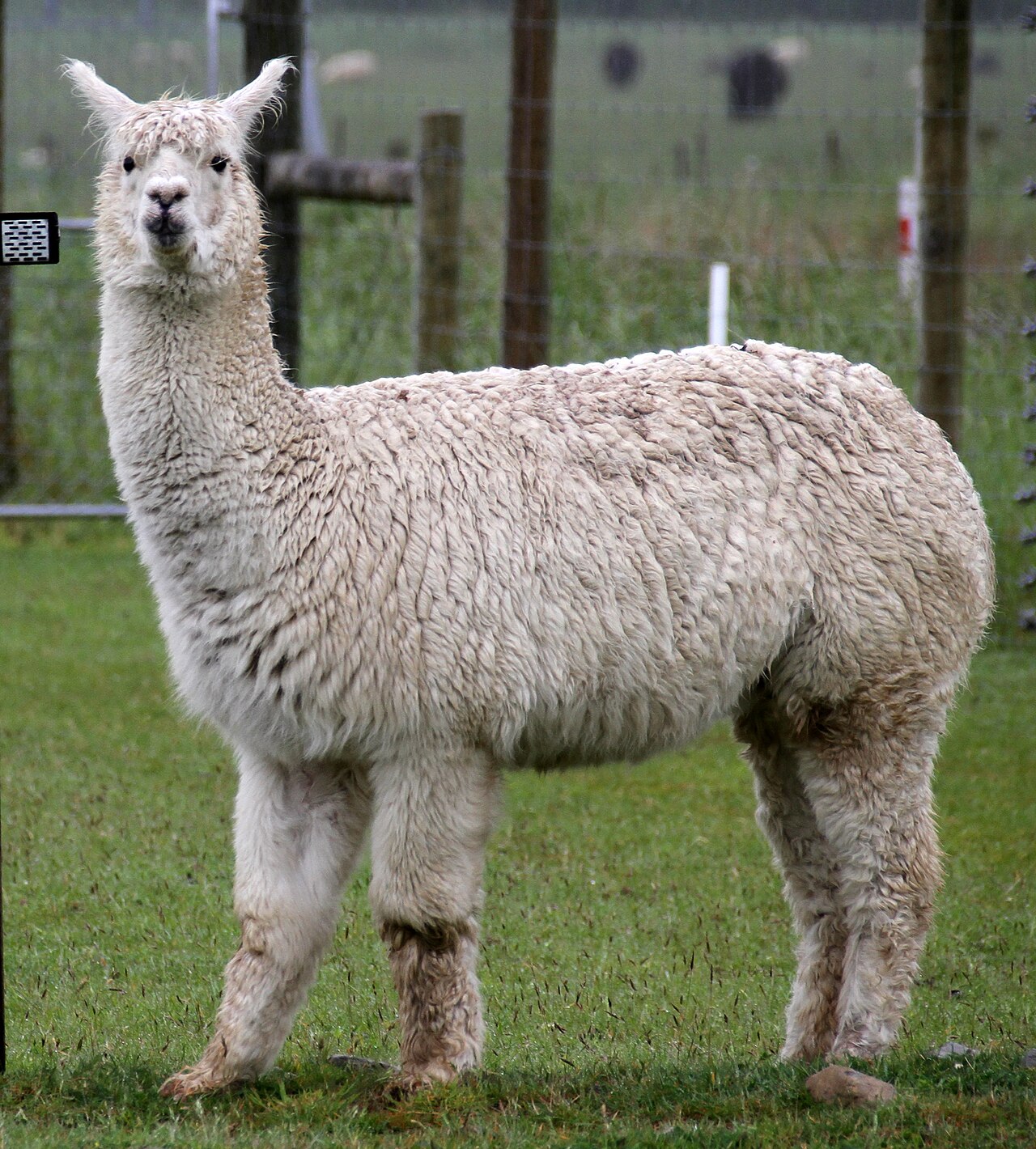
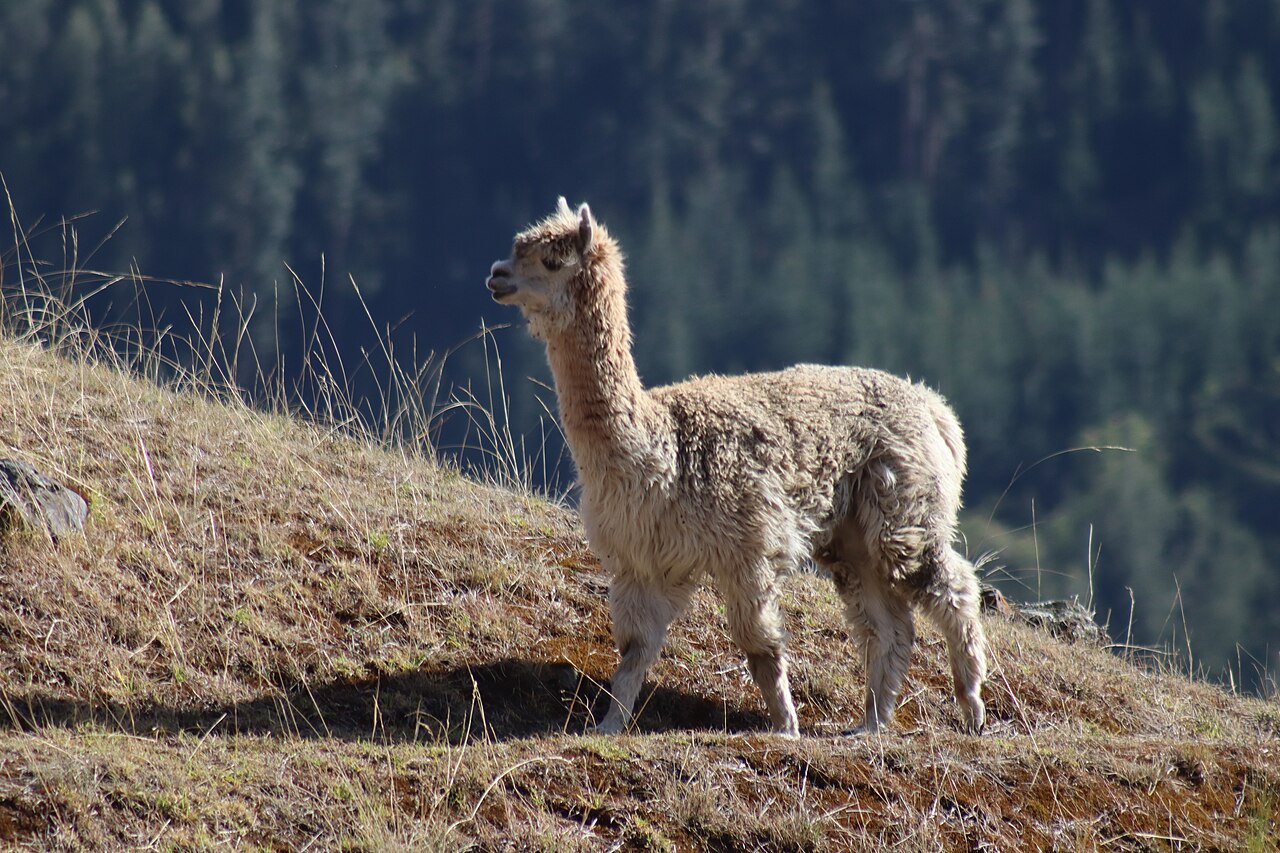
The alpaca (Lama pacos, later reclassified as Vicugna pacos) is a domesticated species of South American camelid, traditionally kept in herds that grazed on the high altitudes of the Andes in Southern Peru, Western Bolivia, Ecuador, and Northern Chile. Alpacas are primarily bred for their highly valued fiber, which is used for making knitted and woven items, and have become popular on farms and ranches worldwide, especially in North America, Europe, and Australia.
- Scientific name
- Lama pacos / Vicugna pacos
- Height at shoulders
- 81–99 cm (32–39 in)
- Domesticated from
- Vicuña (Vicugna vicugna)
- Breeds
- Suri and Huacaya
- Primary use
- Fiber (wool) production
Lore & Background
Alpacas were domesticated thousands of years ago, with the Moche people of Northern Peru often using alpaca images in their art. There are no known wild alpacas; their closest living relative is the vicuña, which genetic analysis (including mitochondrial DNA and microsatellite data) has shown to be the wild ancestor, though some evidence suggests possible hybridization with guanaco.
Reader's Guide
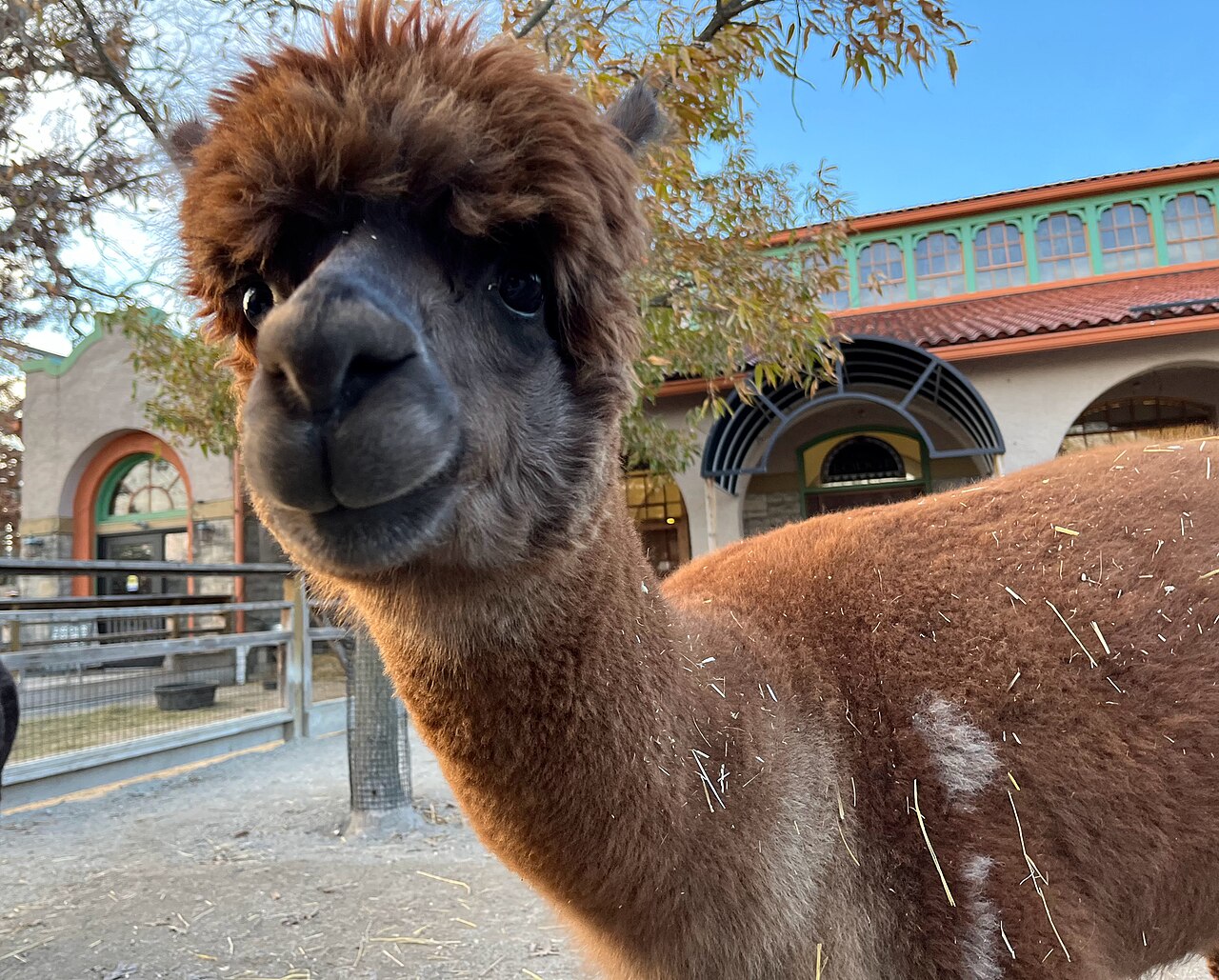
The alpaca holds significance as a domesticated source of luxury fiber, with two distinct breeds—Suri and Huacaya—producing wool of different textures. Huacaya alpacas, comprising about 90% of the population, have a crimped, wavy fiber that grows in bundles, while Suri alpacas have straight, lock-like fiber. Alpacas are often confused with llamas but are visibly shorter and bred primarily for wool, whereas llamas are used as livestock guardians and pack animals. The species' domestication history, involving selective breeding from wild vicuñas and possible hybridization with llamas, reflects complex human-animal relationships in the Andes. Today, alpacas are raised worldwide, contributing to textile industries and rural economies, while their social behavior—including communication through body language and spitting—makes them distinctive herd animals.
Did You Know?
- Alpacas communicate through body language and spitting to show dominance when distressed, fearful, or agitated.
- Male alpacas are more aggressive than females, and alpha males may immobilize the head and neck of a weaker male to show dominance.
- Huacaya alpacas constitute about 90% of the alpaca population, while Suri alpacas make up around 10%.
Deep Roots in the Andes
The story of the alpaca stretches back an astonishing 40 to 45 million years, to the Eocene period, when the common ancestor Protylopus gave rise to the Camelidae family. These early camelids split into two tribes — Camelini heading toward Asia and Lamini migrating toward South America. While camelids vanished from North America roughly three million years ago, they thrived in the south. During the Pliocene, between two and five million years ago, the genus Hemiauchenia divided into Palaeolama and Lama, and the latter eventually split further into Lama and Vicugna as populations moved deeper into South America. By the time humans entered the picture, the wild vicuña was already roaming the high Andes. Archaeological evidence — vicuña and guanaco remains scattered across Peru dating to around 12,000 years ago — marks the long prelude to domestication. The Moche people of northern Peru wove alpaca imagery into their art, and mummified alpacas discovered in the Moquegua valley, dating roughly 900 to 1,000 years back, confirm that two distinct breeds were already being managed by ancient herders.
A Taxonomic Reckoning
For centuries, scientists assumed the alpaca was a descendant of the llama, a conclusion that persisted through the 18th and 19th centuries when the four South American camelids received their formal scientific names. That assumption overlooked striking parallels in size, fleece texture, and dental structure between the alpaca and the smaller vicuña. The classification problem was further muddied by the fact that all four species can interbreed and produce fertile offspring, making morphological boundaries fuzzy. The breakthrough came in 2001, when Miranda Kadwell and colleagues presented DNA evidence to the Royal Society demonstrating that the alpaca's true ancestor is the vicuña, not the guanaco. This prompted a reclassification from Lama pacos to Vicugna pacos. Yet the picture remains nuanced: mitochondrial DNA in many alpacas traces back to guanacos, while microsatellite markers align far more closely with vicuña genetics. Researchers explain this paradox by noting that mtDNA passes only through the maternal line, and centuries of crossbreeding between male alpacas and female llamas have introduced guanaco mitochondrial signatures into the alpaca gene pool.
Two Fibers, One Legacy
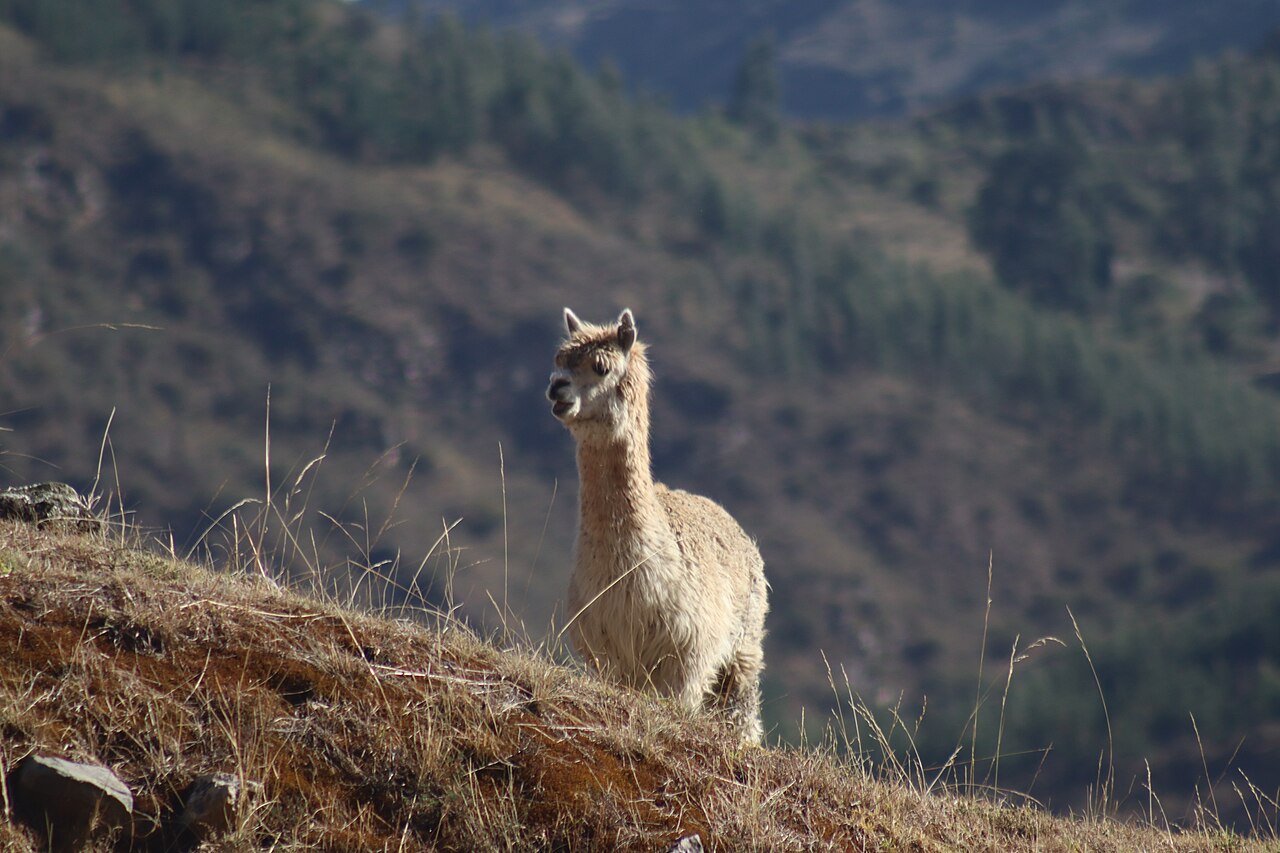
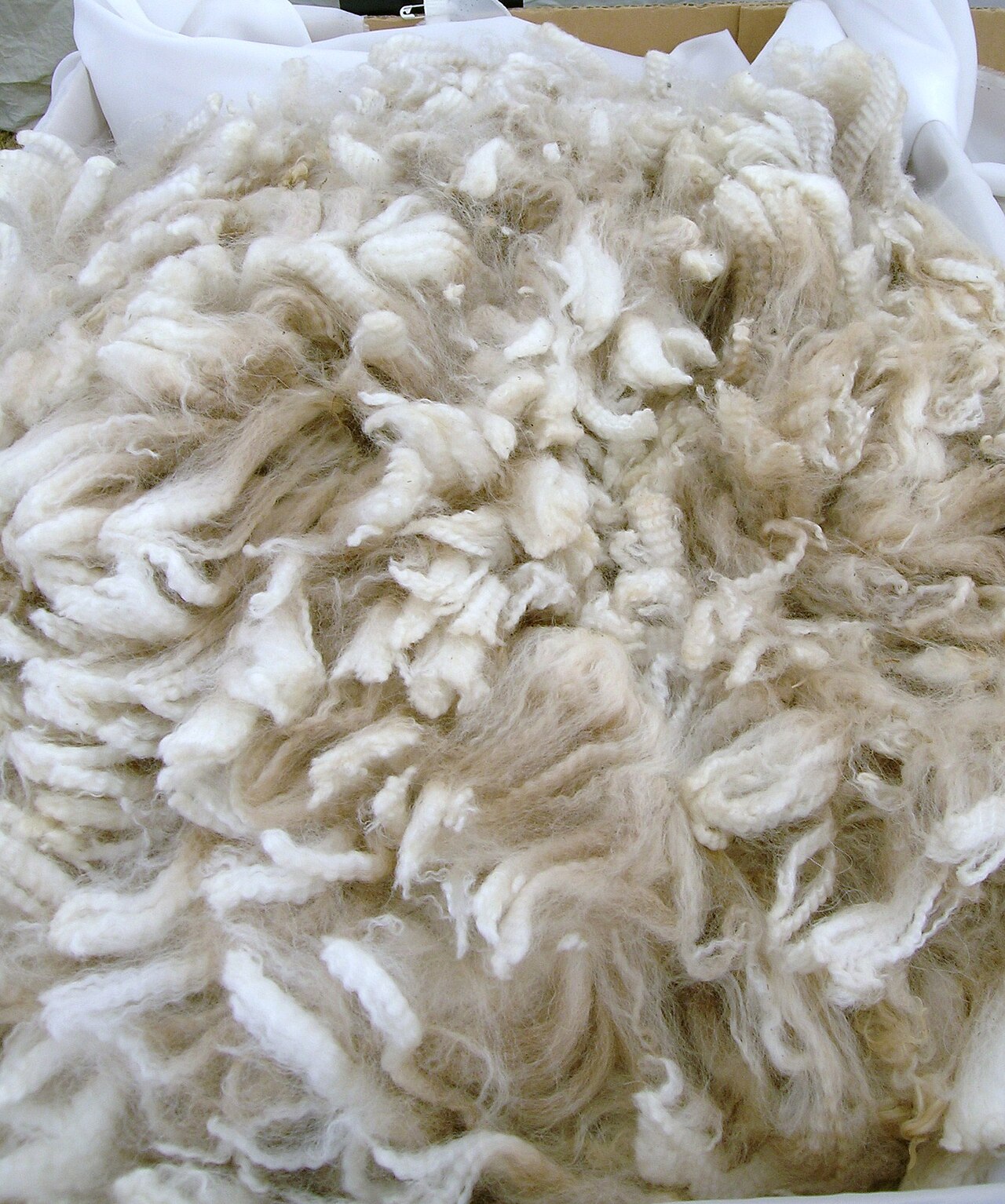
Modern alpacas fall into two breeds distinguished not by geography or taxonomy but by the character of their fleece. The Huacaya, making up roughly ninety percent of the global population, is thought to have emerged in post-colonial Peru, its dense, crimped wool well suited to the harsh cold of the high Andes. Its fiber grows in tight, wavy bundles that give it a plush, rounded appearance. The Suri, by contrast, produces long, straight, pencil-like locks that drape and luster in a way reminiscent of silk. Both fibers are prized in the textile world for knitting and weaving, serving as alternatives to conventional sheep's wool. In the broader fabric trade, the word "alpaca" has broadened to describe a style of cloth that may actually be spun from mohair, Icelandic sheep wool, or other fine fibers, with merchants drawing careful distinctions between true alpaca hair and various grades of mohair and luster. In the Andes, alpacas still graze on the level meadows and escarpments between 3,500 and 5,000 metres above sea level, but today thousands are born and raised on farms across North America, Europe, and Australia, carrying their fiber heritage far beyond the mountains where it began.
Social Lives and Physical Stature
Alpacas are compact animals, standing between 81 and 99 centimetres at the shoulder and weighing from 48 to 90 kilograms, with males and females differing by only a few kilograms when raised under identical conditions. Despite their gentle appearance, they possess a vivid social vocabulary. They communicate primarily through body language, and when distressed, fearful, or agitated, they may spit as a display of dominance. Males are notably more aggressive than females, and in disputes over status, an alpha male will sometimes seize a rival by the head and neck, pinning the challenger to the ground in a demonstration of raw strength. This behavior, while startling to observers, is a structured part of herd hierarchy rather than uncontrolled violence. Alpacas are frequently mistaken for llamas, their larger and more robust relatives, but the distinction matters: llamas have historically served as pack animals and livestock guardians, leveraging their nimble mountain-climbing ability, while alpacas are bred predominantly for their fiber. Both, however, trace their domestication to at least five or six thousand years ago, and all four South American camelids remain close enough genetically to crossbreed successfully.
Gallery
Frequently Asked Questions
What is an alpaca?
The alpaca is a domesticated South American camelid that lives in herds at high altitudes across the Andes. It stands roughly 81 to 99 cm at the shoulder and weighs between 48 and 90 kg.
What are the two recognized alpaca breeds?
There are two main breeds: the Huacaya, which carries a dense, fluffy fleece, and the Suri, known for its long, silky strands that hang in pencil-like locks.
Where do alpacas originate from?
Alpacas were domesticated from the wild vicuña in the high-altitude Andes of southern Peru, western Bolivia, Ecuador, and northern Chile. They have been raised in those regions for at least five to six thousand years.
What are alpacas primarily bred for?
Their main value lies in their exceptionally fine fiber, which is harvested to produce knitted and woven textiles. This has made them popular on farms and ranches across North America, Europe, and Australia as well as their native South America.
How is the alpaca related to the vicuña?
The alpaca was domesticated from the wild vicuña (Vicugna vicugna) several millennia ago. Its scientific name reflects this lineage, having been listed as Lama pacos before being reclassified as Vicugna pacos.
More in Mammals 1-24
Elsewhere in the Mammals universe
Spotted an error? Know more?
This is a living reference — every entry is fact-audited, and reader corrections feed straight into our audit queue. Suggest an edit · See this site's audit record