Aardvark
A burrowing, nocturnal mammal that feeds on ants and termites.

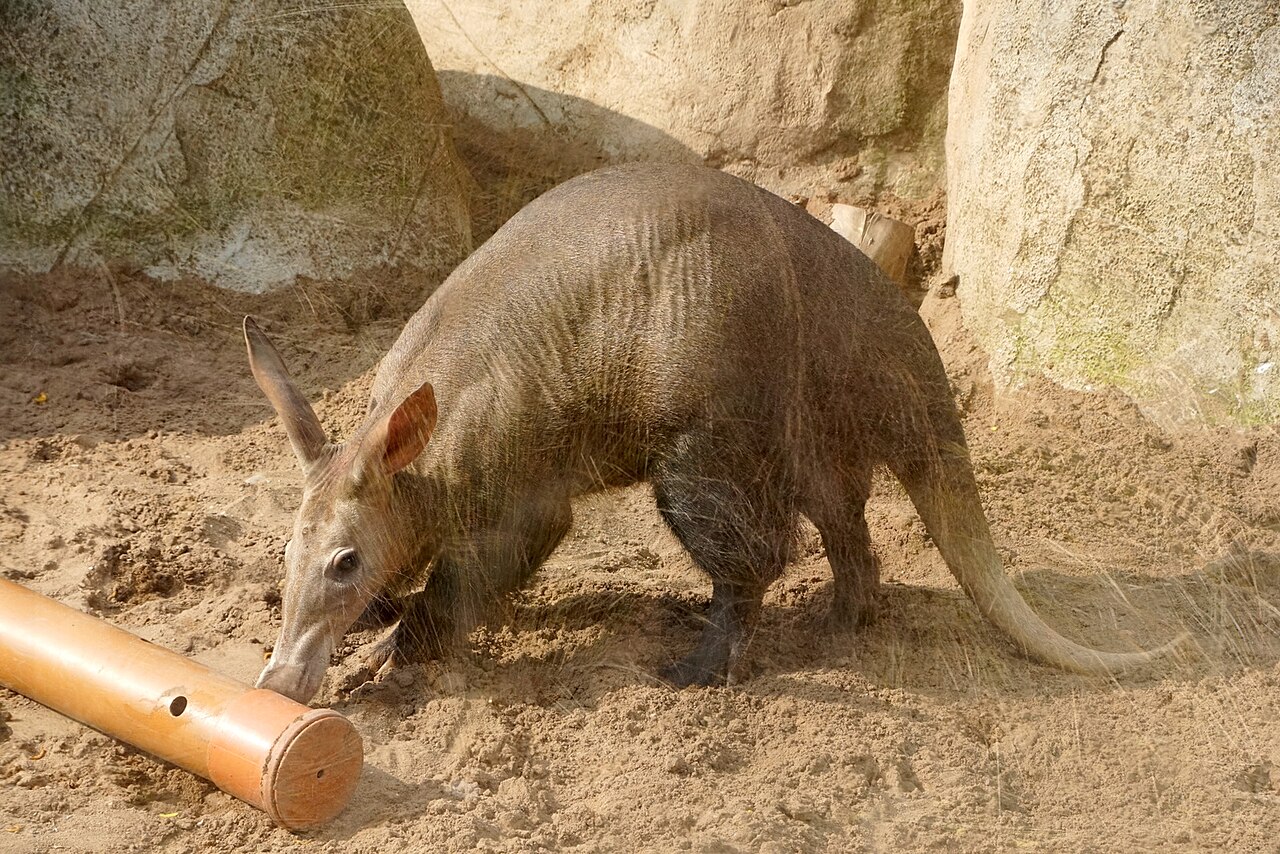
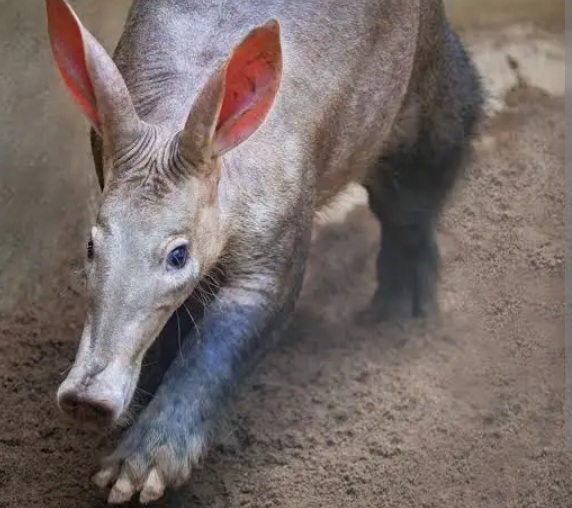
Dallas Krentzel · CC BY 2.0
The aardvark (Orycteropus afer) is a medium-sized, burrowing, nocturnal mammal native to Africa. It is the only living member of the genus Orycteropus, the family Orycteropodidae, and the order Tubulidentata. As an afrotherian, it is part of a clade that also includes elephants, manatees, and hyraxes.
- Scientific name
- Orycteropus afer
- Order
- Tubulidentata
- Family
- Orycteropodidae
- Genus
- Orycteropus
- Native range
- Sub-Saharan Africa
Lore & Background
The aardvark is found over much of the southern two-thirds of the African continent, avoiding mainly rocky areas. It subsists on ants and termites (myrmecophagy), using its sharp claws and powerful legs to dig insects out of their hills and its long snout to sniff out food. It digs a burrow in which to live and rear its young. The name 'aardvark' is Afrikaans, meaning 'earth pig' or 'ground pig', due to its burrowing habits. Its scientific name Orycteropus means 'burrowing foot', and afer refers to Africa. The order name Tubulidentata comes from the tubule-style teeth.
Reader's Guide
The aardvark is the sole extant representative of the obscure mammalian order Tubulidentata. It is not closely related to pigs or South American anteaters; similarities with the latter are due to convergent evolution. Its closest living relatives are elephant shrews, tenrecs, and golden moles, and together with sirenians, hyraxes, and elephants, they form the superorder Afrotheria. The aardvark is considered a living fossil, as its chromosomes are highly conserved, reflecting much of the early eutherian arrangement. Its teeth are unique: each tooth has a cluster of thin, hexagonal, upright, parallel tubes of vasodentin with individual pulp canals, held together by cementum, and they lack enamel, wearing away and regrowing continuously. The aardvark's keen sense of smell is supported by ten nasal conchae and nine olfactory bulbs, more than any other mammal. Its stomach has a muscular pyloric area that acts as a gizzard, rendering chewing unnecessary.
Did You Know?
- The aardvark is the only living member of the order Tubulidentata.
- Its teeth have no enamel coating and are worn away and regrow continuously.
- The aardvark has ten nasal conchae, more than any other placental mammal.
- It is sometimes described as a primitive mammal, but its chromosomes do not represent a direct ancestral eutherian arrangement.
Taxonomy & Evolutionary History
The aardvark stands alone in the animal kingdom as the sole surviving representative of the order Tubulidentata, the family Orycteropodidae, and the genus Orycteropus. Despite its superficial resemblance to pigs or South American anteaters, it shares no close kinship with either. Instead, it belongs to the superorder Afrotheria, a clade that also encompasses elephants, manatees, hyraxes, and sirenians. Its closest living relatives are elephant shrews, tenrecs, and golden moles. Fossil evidence suggests early aardvark relatives appeared in Africa toward the close of the Paleocene epoch. The first clearly identifiable tubulidentate, Myorycteropus africanus, was recovered from Miocene deposits in Kenya, while the earliest known member of the genus Orycteropus, O. mauritanicus, was unearthed in Algeria from middle Miocene strata. Fossils dating to roughly five million years ago have been discovered across Europe and the Near East. A particularly intriguing case is Plesiorycteropus from Madagascar, once classified as a tubulidentate but now reclassified as a relative of golden moles and tenrecs that independently evolved an aardvark-like form through convergent evolution.
Physical Anatomy & Adaptations
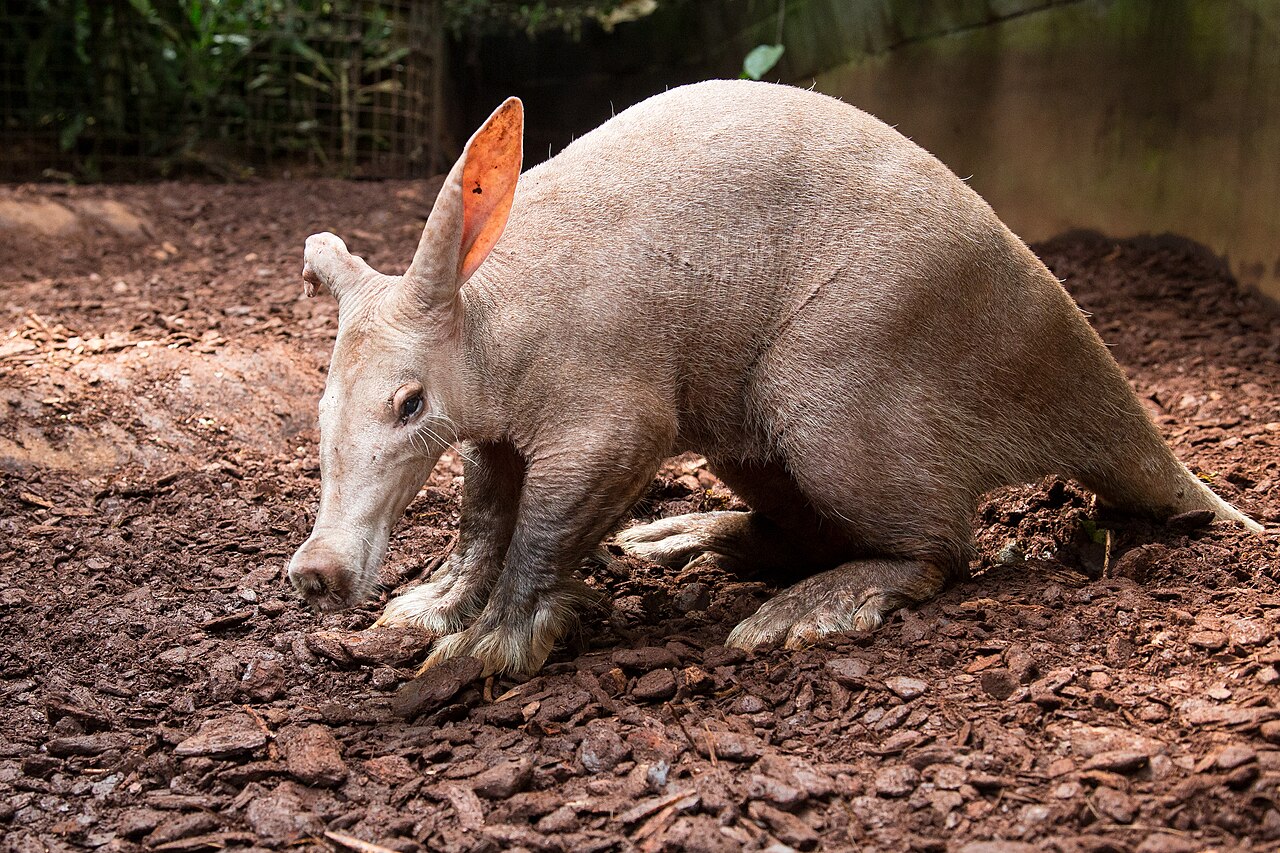
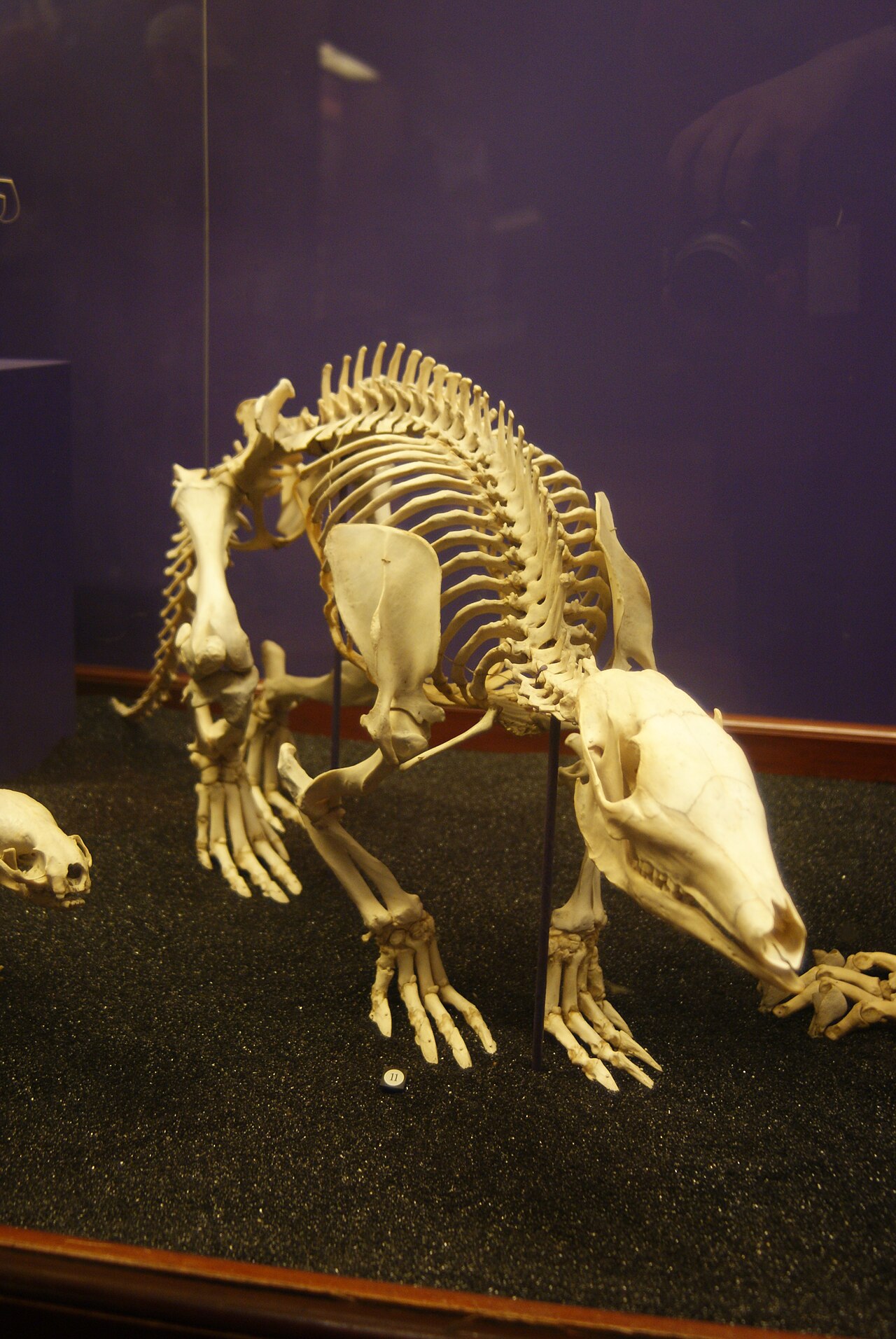
The aardvark is a stout, pig-like mammal weighing between 60 and 80 kilograms, with a body length of 105 to 130 centimeters and a shoulder height of about 60 centimeters. Its most remarkable anatomical feature is its dentition: rather than possessing a conventional pulp cavity, each tooth is composed of hundreds of thin, hexagonal, parallel tubes of vasodentin held together by cementum, with the largest teeth containing approximately 1,500 columns. These teeth lack enamel and are continuously worn down. The front feet have lost the pollex, leaving four toes, while the hind feet retain all five. Each toe carries a large, flattened, shovel-like nail that sits somewhere between a claw and a hoof. Beneath the surface, a specialized endosteal tissue called compacted coarse cancellous bone provides exceptional stress resistance, enabling the aardvark to excavate extensive burrow systems. The forearms feature an unusually stout ulna and radius that further aid in digging. The animal's coat is a pale yellowish-grey, often stained reddish-brown by soil, with hairs typically grouped in clusters of three or four.
Ecology & Daily Life
The aardvark is a strictly nocturnal, burrowing mammal that ranges across much of the southern two-thirds of the African continent, deliberately avoiding predominantly rocky terrain. Its diet consists almost entirely of ants and termites, a feeding strategy known as myrmecophagy. To access its prey, the aardvark employs its powerful legs and sharp, shovel-like claws to tear open insect mounds, then uses its greatly elongated snout—capped with a disc housing the nostrils—to sniff out and extract the colony members. The animal excavates a burrow that serves as both shelter and a nursery for rearing its young. Its primary defense against predators is not its thin coat but rather its remarkably tough skin. The aardvark does not display sexual dimorphism, meaning males and females are essentially indistinguishable in size and build. As the largest member of the clade Afroinsectiphilia, it occupies a unique ecological niche with no direct competitors on the continent.
Naming & Subspecies Diversity
The common name aardvark derives from Afrikaans, tracing back to the earlier form erdvark, which translates to earth pig or ground pig—a reference to the animal's burrowing lifestyle. The scientific binomial Orycteropus afer carries its own etymological story: Orycteropus means burrowing foot, while afer simply denotes Africa. The order name Tubulidentata references the distinctive tubule-style internal tooth structure. Colloquially, the animal has been called the African ant bear, Cape anteater, or simply anteater, though the last is misleading given its lack of close relation to South American anteaters. Taxonomically, researchers have described seventeen subspecies of Orycteropus afer, ranging from the Southern aardvark (O. a. afer) to the Eastern aardvark (O. a. wertheri), with others bearing names honoring various taxonomists. However, these subspecies are considered poorly defined, and the aardvark is generally treated as a single, highly variable species.
Gallery

Frequently Asked Questions
What is an aardvark?
The aardvark is a medium-sized, nocturnal burrower native to Sub-Saharan Africa. It is the only living species in its entire order, Tubulidentata, which makes it biologically one-of-a-kind.
What does an aardvark eat?
This mammal feeds almost exclusively on ants and termites, pulling them from their nests with a long, sticky tongue. Its diet places it among the very few mammals that rely almost entirely on these insects.
Where do aardvarks live and when are they active?
Aardvarks range across Sub-Saharan Africa, where they dig extensive burrow systems for shelter and foraging. They are primarily nocturnal, spending most daylight hours underground.
What is the aardvark's scientific classification?
Its binomial name is Orycteropus afer, placing it in the family Orycteropodidae and the order Tubulidentata. As an afrotherian, it is more closely related to elephants, manatees, and hyraxes than to any other familiar mammal group.
More in Mammals 1-24
Elsewhere in the Mammals universe
Spotted an error? Know more?
This is a living reference — every entry is fact-audited, and reader corrections feed straight into our audit queue. Suggest an edit · See this site's audit record