African buffalo
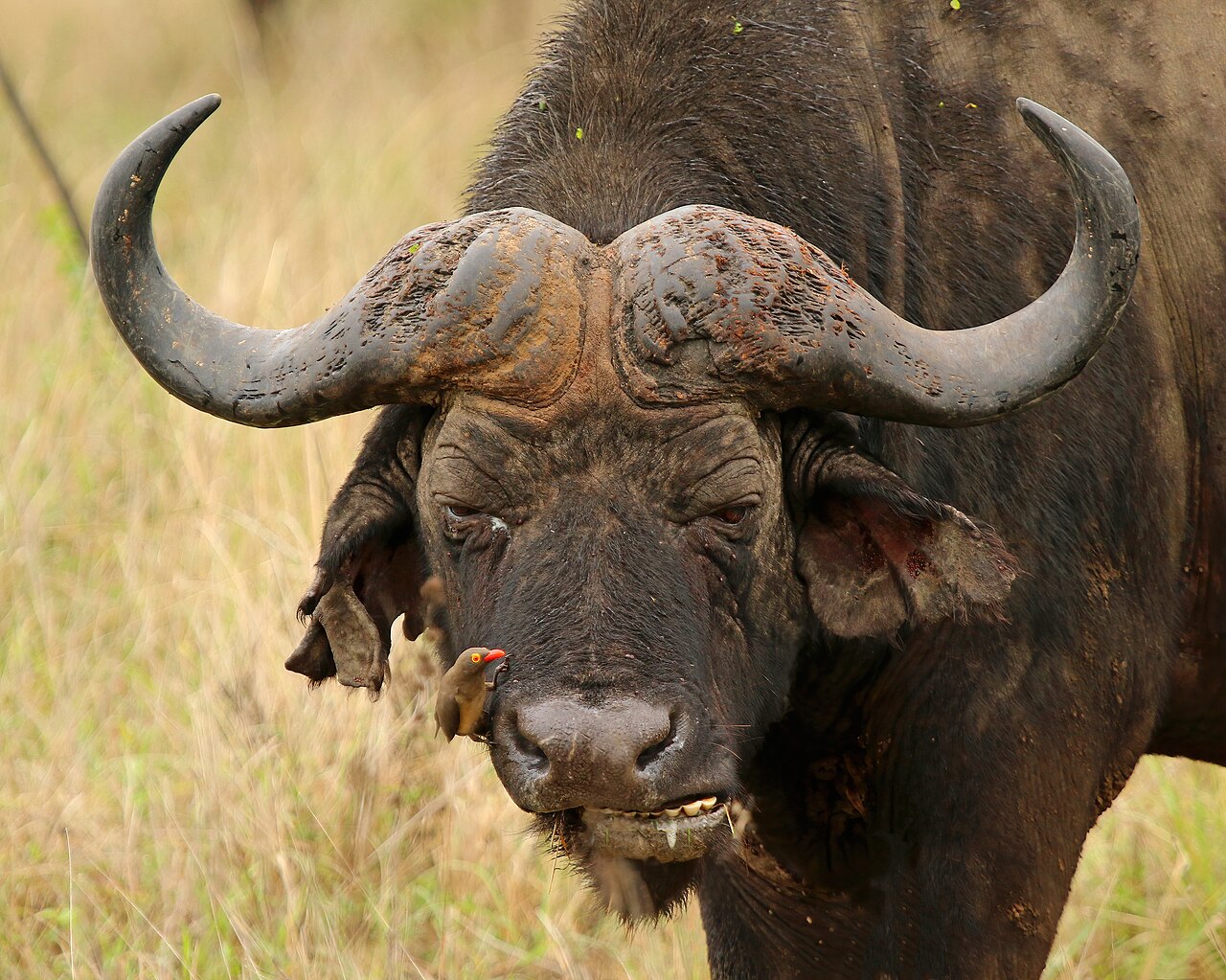
Large African bovid with fused horn bases forming a boss.

Paul M Rae · CC BY 2.5
The African buffalo (Syncerus caffer) is a large species of true buffalo native to Sub-Saharan Africa, found in disconnected ranges from southeastern Senegal through West and Central Africa to South Africa. It is one of the Big Five game animals, with the Cape buffalo (Syncerus caffer caffer) being a sought-after trophy in hunting. The species has never been domesticated, unlike the wild yak and wild water buffalo, due in part to its unpredictable temperament.
- chromosome_count
- 54
Lore & Background
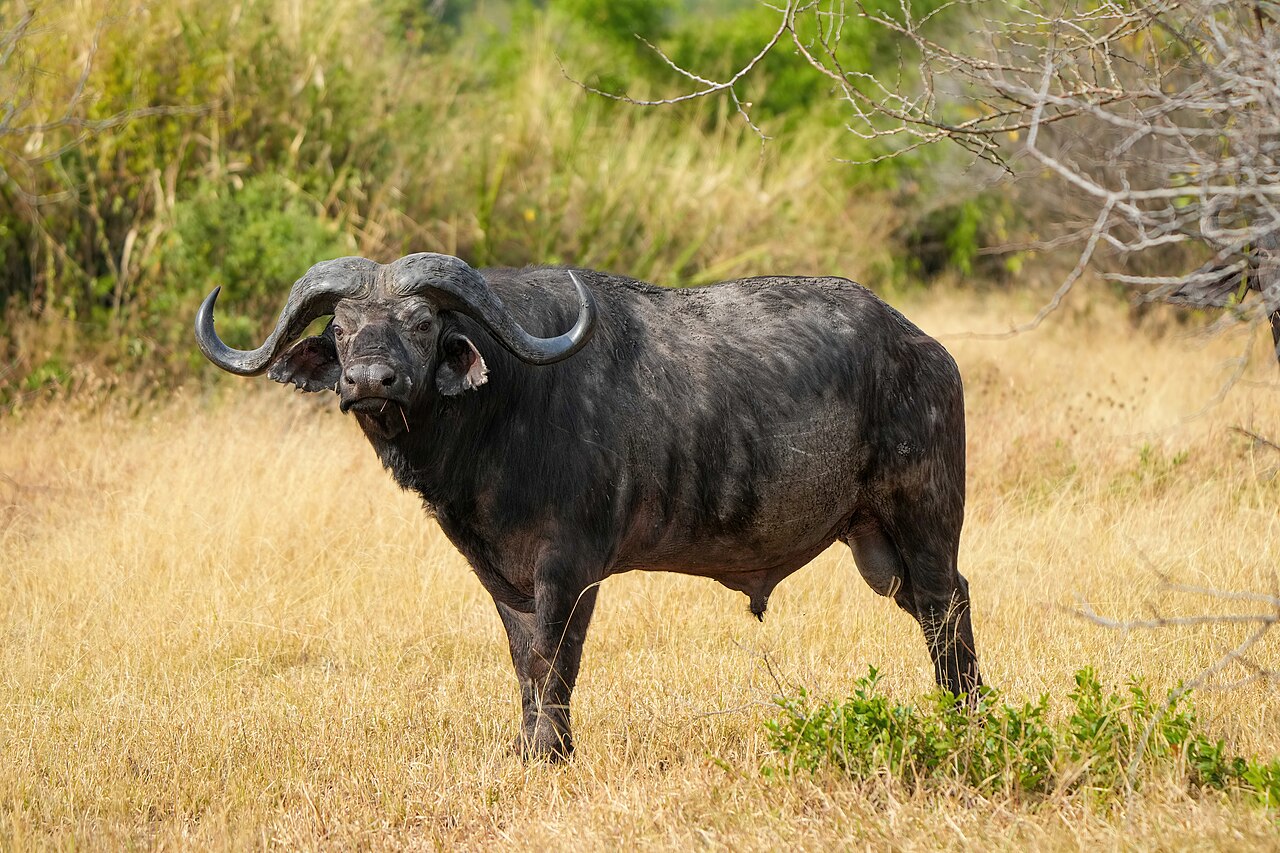
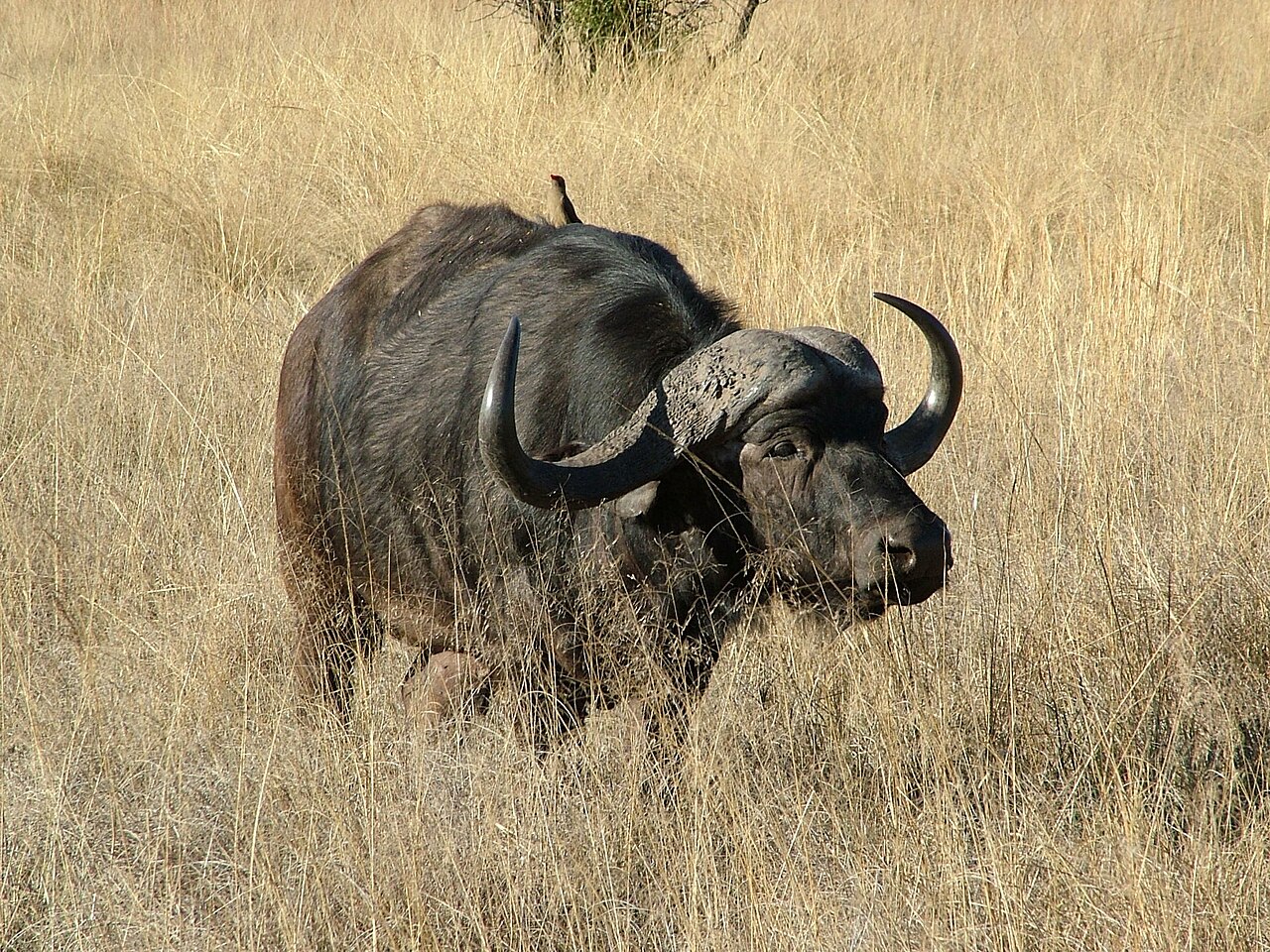
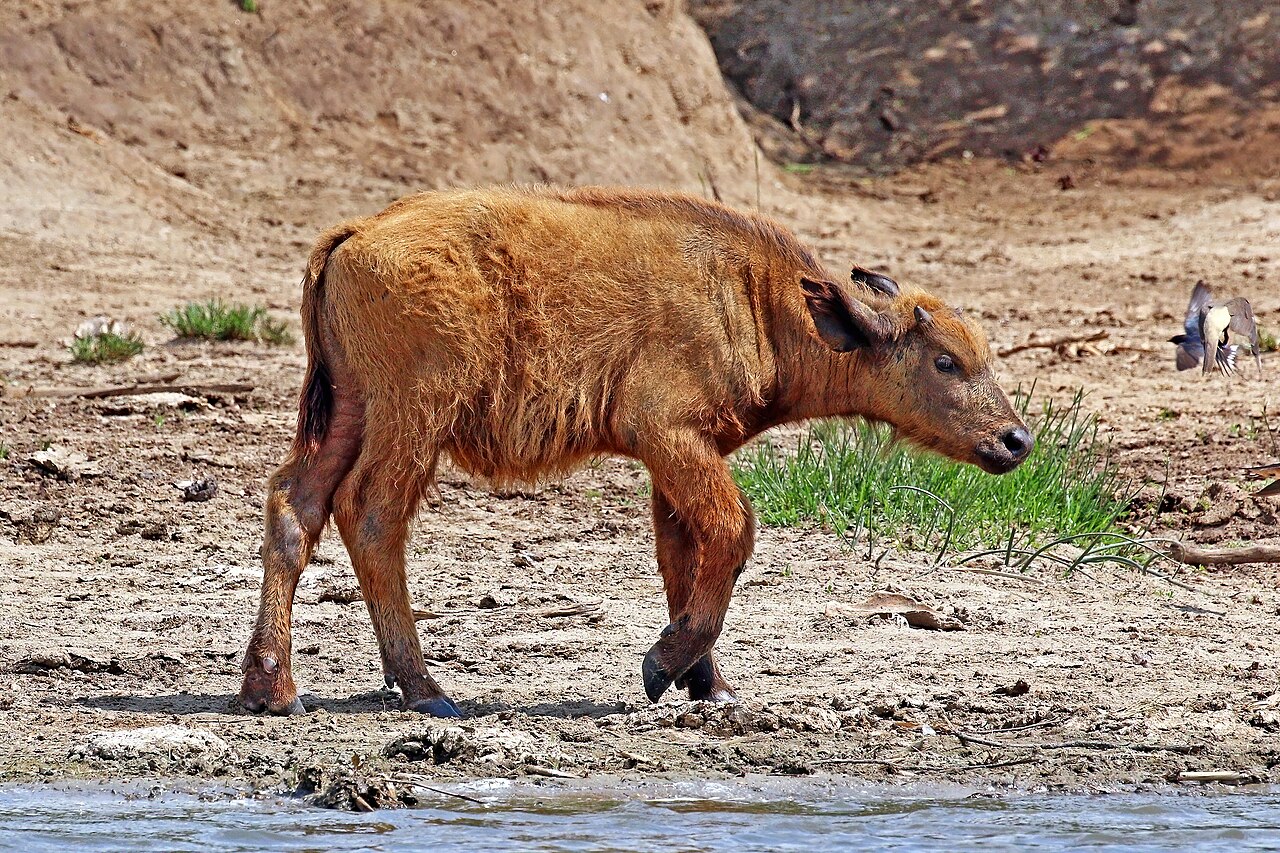
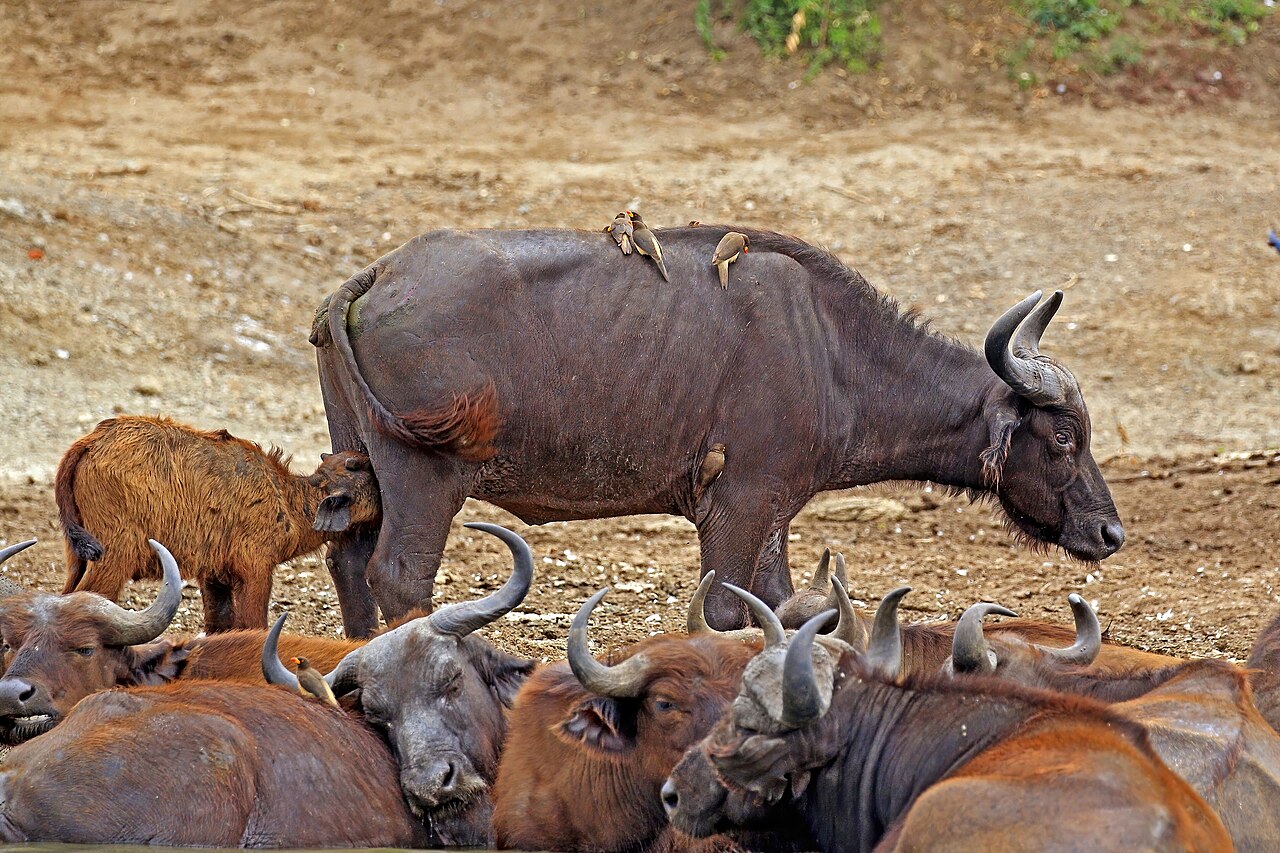
The African buffalo is a robust species with a long, stocky body and short, thickset legs. Its characteristic horns have fused bases forming a continuous bone shield called a 'boss' across the top of the head. Horns form fully by age 5 or 6, but the boss hardens at 8 to 9 years. Females have smaller horns without a boss. Savannah-type buffaloes have black or dark brown coats, while forest-type buffaloes are reddish brown, 30–40% smaller, with more hair around the ears.
Reader's Guide
The African buffalo is one of the most successful grazers in Africa, inhabiting savannas, swamps, floodplains, and forests. It requires water daily and prefers dense cover. Its diet consists mainly of grasses, with C4 plants forming the bulk. Herds mow down grasses, making way for more selective grazers. Natural predators include lions, African wild dogs, spotted hyenas, and Nile crocodiles. Lions regularly kill buffaloes, often requiring multiple lions to bring down an adult. The species is susceptible to diseases shared with domestic cattle, such as bovine tuberculosis and foot-and-mouth disease, which restrict legal movements. Some disease-free herds have been bred and sold for high prices.
Did You Know?
- The African buffalo has 54 chromosomes, unlike American bison and domestic cattle which have 60, but bison and cattle can hybridize (producing beefalo).
The Horn Boss and Physical Architecture
The most immediately striking feature of an adult African buffalo is the fused base of its horns, which creates a continuous bony shield called a boss across the crown of the head. This structure is unique to the species among large bovids and does not fully harden until the animal is eight or nine years old, even though the horns themselves have taken their final shape by five or six. In the largest bulls, the tips can span more than a metre, with the recorded extreme reaching 164 centimetres.
Beneath that dramatic headgear, the body is built for power rather than height. Shoulder height tops out around 1.7 metres while head-and-body length can stretch to 3.4 metres, giving the animal a long, stocky silhouette on short, thickset legs. The front hooves are noticeably broader than the rear, an adaptation for bearing the heavier, more muscular forequarters. Cape buffaloes tip the scales between 425 and 870 kilograms, with males roughly 100 kilograms heavier than females, whereas forest-type individuals weigh only about half as much.
Genetically, the species carries 52 chromosomes—eight fewer than domestic cattle or American bison—making cross-breeding with those animals impossible.
Five Subspecies Across the Continent
Most authorities recognise five valid subspecies of Syncerus caffer, each adapted to a different ecological niche across Sub-Saharan Africa. The Cape buffalo, the nominotypical and largest form, ranges through eastern and southern Africa. The forest buffalo, found in the dense woodland of Central and West Africa, is the smallest, weighing roughly half as much as its Cape counterpart and sporting a reddish-brown coat with noticeably more hair around the ears and horns that curve backward and slightly upward rather than fusing into a boss.
The Sudan buffalo occupies the drier, more northerly stretches of Central and West Africa as a smaller version of the Cape type, while the Nile buffalo holds a similar dry northern habitat in East and Central Africa and is sometimes lumped together with the Sudan form. The mountain buffalo, a disputed taxon, is restricted to the Virunga Mountains.
Savannah-type individuals mature from a red calf coat into black or dark brown, with old bulls developing pale rings around the eyes and across the face. Females tend toward a redder hue. Forest-type calves also start red but retain their warmer tones into adulthood. Together these forms stretch from south-eastern Senegal all the way to South Africa in a series of disconnected populations.
Grazing Ecology and Habitat Use
Among Africa's large herbivores, the buffalo ranks as one of the most effective grazers. It thrives in savannas, swamps, floodplains, mopane grasslands, and even the forests of the continent's major mountain ranges, preferring dense cover such as reeds and thickets though it will also forage in open woodland. A non-negotiable requirement is daily access to water, so the species depends on perennial sources rather than seasonal ones.
Dietarily, the buffalo is a pure or mixed grazer whose intake is dominated by C4 grasses, though in some regions—particularly among the forest subspecies—up to ten percent of the diet shifts to C3 plants through supplemental browsing. The animals show a clear preference for grasses with a high leaf-to-stem ratio, such as those in the genus Themeda, and during the wet season the leaves of grass make up the bulk of what they consume. Their wide row of incisors and long tongue allow them to strip grass faster than most other African herbivores, and after a feeding bout they settle to chew their cud and extract remaining nutrients.
Herds moving through a grassland effectively mow the vegetation, opening the sward for more selective grazers that follow. The buffaloes themselves do not linger on trampled or depleted patches, moving on once the forage is spent.
Untamed: Temperament, Predation, and the Absence of Domestication
Despite its size and the formidable boss, the African buffalo has never been tamed. Its unpredictable temperament is widely cited as the reason no domesticated descendants exist, a stark contrast to the wild yak and wild water buffalo, both of which gave rise to their domestic counterparts. Genetically, the species is actually closer to the Asian buffalo genus Bubalus than to American bison or domestic cattle, and its 52-chromosome count seals off any possibility of hybridisation with those animals.
In the wild, adult buffaloes face a short list of predators: lions, African wild dogs, spotted hyenas, and Nile crocodiles. Lions take buffaloes regularly and in some regions they are the pride's primary prey, though bringing down a single adult often requires the coordinated effort of several lions or even the whole pride. On rare occasions a lone adult male lion has succeeded alone. The buffalo, however, is no passive victim; documented incidents show individuals defending themselves and killing lions.
As one of the Big Five, the Cape buffalo remains a highly sought-after trophy in hunting, a testament to the very wildness that has kept it beyond the reach of human domestication for millennia.
Gallery
Frequently Asked Questions
What is the African buffalo?
The African buffalo (Syncerus caffer) is a large bovid species that roams the savannas and woodlands of Sub-Saharan Africa. It is one of the continent's most iconic big game animals and carries 54 chromosomes.
What makes the African buffalo's horns so distinctive?
The bases of its horns grow together across the top of the skull, fusing into a single solid bony plate known as a boss. This gives the animal a uniquely broad, shield-like head that sets it apart from other bovids.
Why has the African buffalo never been domesticated?
Unlike the wild yak or water buffalo, no human culture has ever successfully tamed it, largely because of its fiercely unpredictable and aggressive temperament. It remains one of the few large African bovids that is entirely wild.
Where does the African buffalo live in the wild?
Its range is broken into disconnected patches stretching from southeastern Senegal through West and Central Africa all the way down to South Africa. It typically occupies open savanna, dense woodland, and wetland habitats.
Why is the African buffalo considered one of the Big Five?
It earned its Big Five status because it is regarded as one of the most dangerous and challenging large game animals to track on the continent. The Cape buffalo subspecies in particular is a highly sought-after trophy among big-game hunters.
More in Mammals 1-24
Elsewhere in the Mammals universe
Spotted an error? Know more?
This is a living reference — every entry is fact-audited, and reader corrections feed straight into our audit queue. Suggest an edit · See this site's audit record