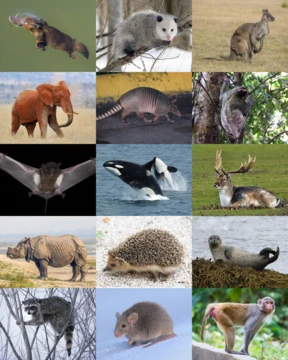
Felidae
Family of obligate carnivores known as cats.

Banoviciminer · CC BY-SA 4.0
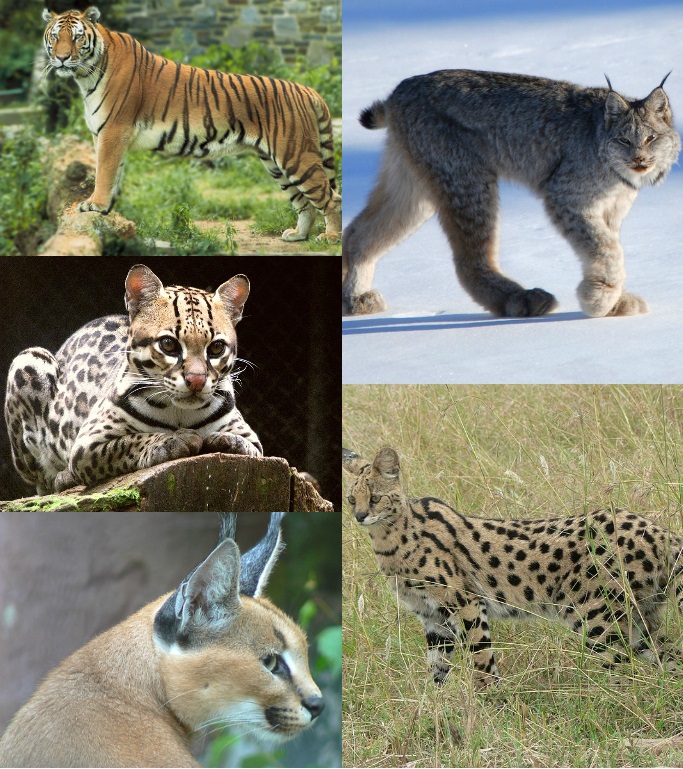
Felidae (FEE-lə-dee) is the family of mammals in the order Carnivora colloquially referred to as cats. A member of this family is also called a felid. The 41 extant Felidae species exhibit the greatest diversity in fur patterns of all terrestrial carnivores. They are obligate carnivores, and most are solitary predators that ambush or stalk their prey. The first cats emerged during the Oligocene about 25 million years ago, with the appearance of Proailurus, while Pseudaelurus appeared later in the Miocene about 20 million years ago.
- Extant species
- 41
Lore & Background
Reginald Innes Pocock divided the extant Felidae into three subfamilies: Pantherinae, Felinae, and Acinonychinae, based on ossification of the hyoid apparatus and cutaneous sheaths protecting claws. This concept was revised following developments in molecular biology and morphological data analysis. Today, the living Felidae are divided into two subfamilies: Pantherinae (including four Panthera and two Neofelis species) and Felinae (including the other 35 species in 12 genera), with Acinonychinae subsumed into Felinae. The first cats emerged during the Oligocene about 25 million years ago, with Proailurus, while Pseudaelurus appeared later in the Miocene about 20 million years ago. The latter species complex was ancestral to two main lines: cats in the extant subfamilies and the saber-toothed cats of the extinct subfamily Machairodontinae. The false saber-toothed cats (Barbourofelidae and Nimravidae) are not true cats but are closely related. Together with Felidae, Viverridae, Nandiniidae, Eupleridae, hyenas, and mongooses, they constitute Feliformia. All members of the cat family share characteristics: digitigrade posture, five toes on forefeet and four on hind feet, protractile claws guarded by cutaneous sheaths (except Acinonyx), lithe flexible bodies, foreshortened skulls, 28 or 30 teeth with carnassials adapted for tearing flesh, large canine teeth, tongues with horn-like papillae, excellent night vision due to a tapetum lucidum, well-developed whiskers, sensitive external ears, and a vomeronasal organ. They cannot detect sweetness. Vocalizations include mewing, chuffing, spitting, hissing, snarling, and growling; purring occurs in many species, while roaring is limited to lions, leopards, tigers, and jaguars (the snow leopard cannot roar).
Reader's Guide
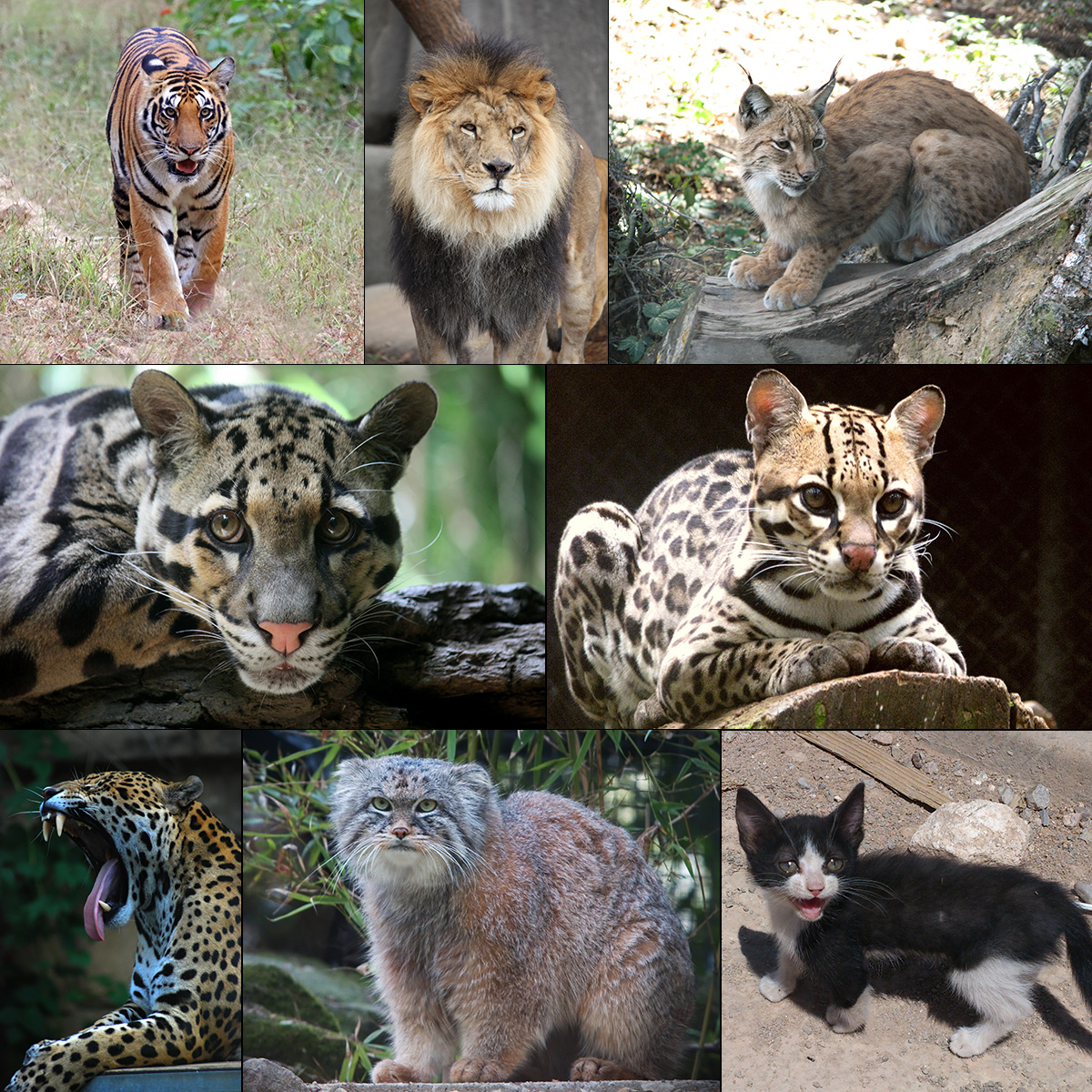
Felidae represents a diverse family of obligate carnivores that have adapted to a wide range of habitats, including forests, savannas, arid environments, wetlands, and mountainous terrain. Their activity patterns range from nocturnal and crepuscular to diurnal, depending on prey species. The family's evolutionary history extends back to the Oligocene, with Proailurus and Pseudaelurus as early ancestors. The saber-toothed cats of the extinct subfamily Machairodontinae represent a notable offshoot. Fur color and patterns are highly diverse, from white to black, with spots, stripes, blotches, and rosettes. Most species are born with spotted fur, though some, like the jaguarundi, Asian golden cat, and caracal, are not. Melanism occurs in several species, while cougars lack melanism but exhibit leucism and albinism. The classification of Felidae has evolved from Pocock's three subfamilies to the current two-subfamily system based on molecular and morphological evidence. The family's significance lies in its role as apex predators across many ecosystems, its unique adaptations (such as protractile claws, powerful bite, and enhanced night vision), and its close relationship with humans through domestic cats. The family also includes species of conservation concern, such as tigers and snow leopards.
Did You Know?
- Felidae species have type IIx muscle fibers three times more powerful than the muscle fibers of human athletes.
- The eyes of felids are about six times more light-sensitive than those of humans due to a tapetum lucidum.
- Only lions, leopards, tigers, and jaguars are truly able to roar (the snow leopard cannot roar).
- Most cat species are born with spotted fur, but notable exceptions include the jaguarundi, caracal, and Asian golden cat (which is often born with spots). Caracal kittens are usually uniform in color.
Physical Architecture & Locomotion
All felids are digitigrade, meaning they walk on their toes rather than their heels, with five toes on forefeet and four on hind feet. Their claws are curved and protractile—actively extended by contracting toe muscles and passively withdrawn—sheathed in skin folds that keep them sharp, with the notable exception of the cheetah (Acinonyx). The plantar pads form compact three-lobed cushions on both fore and hind feet. Their bodies are lithe and muscular with flexible limbs, while their skulls are foreshortened with a rounded profile and large orbits. The dental formula is 3.1.3.1/3.1.2.1, totaling 30 teeth, with the upper third premolar and lower first molar modified into carnassial blades for shearing flesh. Canine teeth are large, and the lower carnassial carries two compressed blade-like cusps. Their tongues bear horn-like papillae that rasp meat from bone and assist in grooming. The nose projects slightly beyond the lower jaw, and the vomeronasal organ in the roof of the mouth lets them taste the air—a behavior linked to the flehmen response.
Sensory World & Vocal Communication
Felid eyes are relatively large and positioned for binocular vision, with a tapetum lucidum that reflects light back through the retina, making their vision roughly six times more light-sensitive than a human's. A high proportion of rod cells lets them track moving objects in dim conditions, while cone cells handle daytime color. Whiskers above the eyes, on the cheeks, and along the muzzle—absent below the chin—aid navigation in darkness and help secure prey. External ears are large and tuned to high-frequency sounds, particularly in smaller species, enabling them to pinpoint small rodent prey. Vocally, felids share a common repertoire of mewing, chuffing, spitting, hissing, snarling, and growling, with pitch scaling to body size across a 50-to-10,000-hertz range. Mewing and chuffing serve as contact calls; the rest signal aggression. Most cats purr during both inhalation and exhalation at 16.8–27.5 Hz, though pantherines purr mainly during oestrus, copulation, and suckling. True roaring requires an elongated larynx and specialized hyoid apparatus, a capability limited to lions, leopards, tigers, and jaguars. Clouded leopards can neither purr nor roar.
Taxonomic Framework & Ecological Range
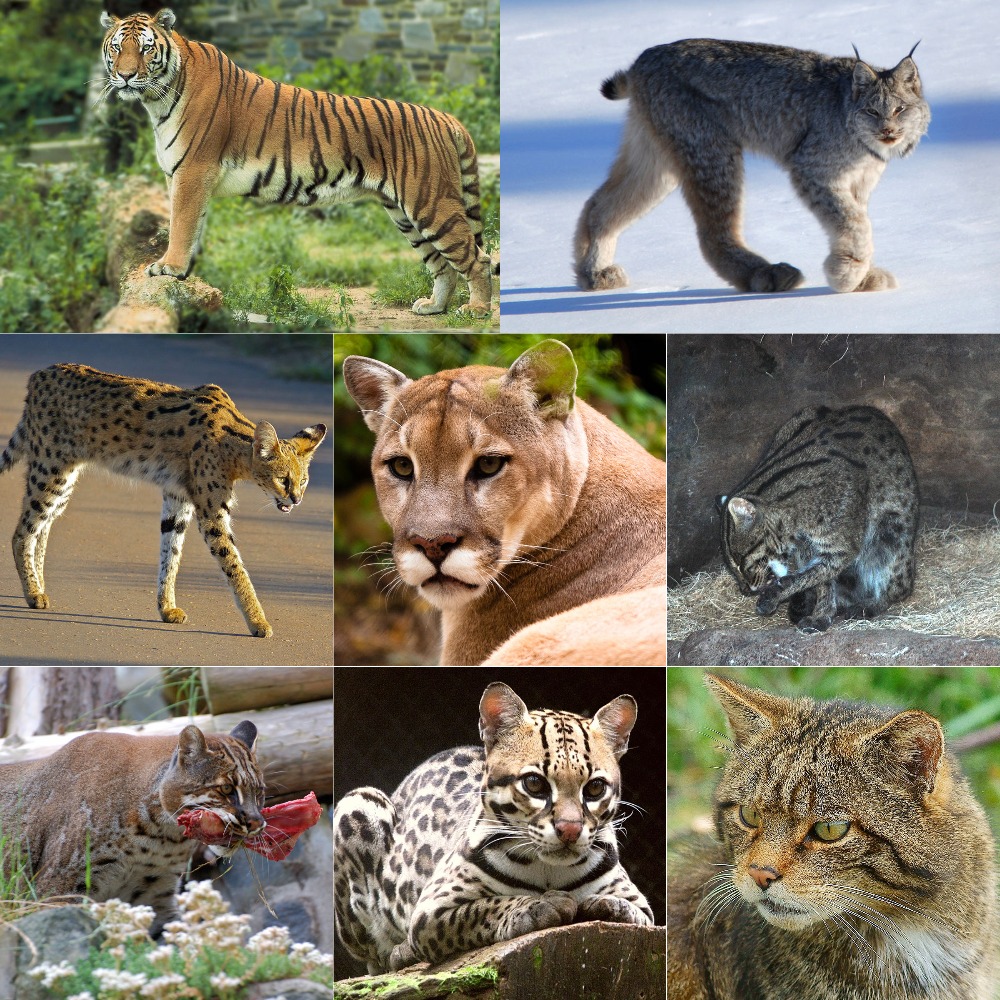
The family Felidae encompasses 41 living species, displaying the greatest diversity in fur patterning among all terrestrial carnivores. Reginald Innes Pocock originally split extant cats into three subfamilies—Pantherinae, Felinae, and Acinonychinae—based on differences in hyoid ossification and claw sheaths. Advances in molecular biology and morphological analysis have since consolidated the classification into two subfamilies: Pantherinae and Felinae, with the cheetah lineage (Acinonychinae) absorbed into the latter. Pantherinae comprises five Panthera species and two Neofelis species. Felinae is far broader, containing the remaining 34 species distributed across 12 genera. Ecologically, wild cats occupy forests, savannas, arid regions, wetlands, and mountainous terrain. Their activity patterns shift from nocturnal and crepuscular to diurnal, shaped by the rhythms of their preferred prey. All are obligate carnivores, and most hunt as solitary ambush or stalking predators.
Deep Roots & Extinct Relatives
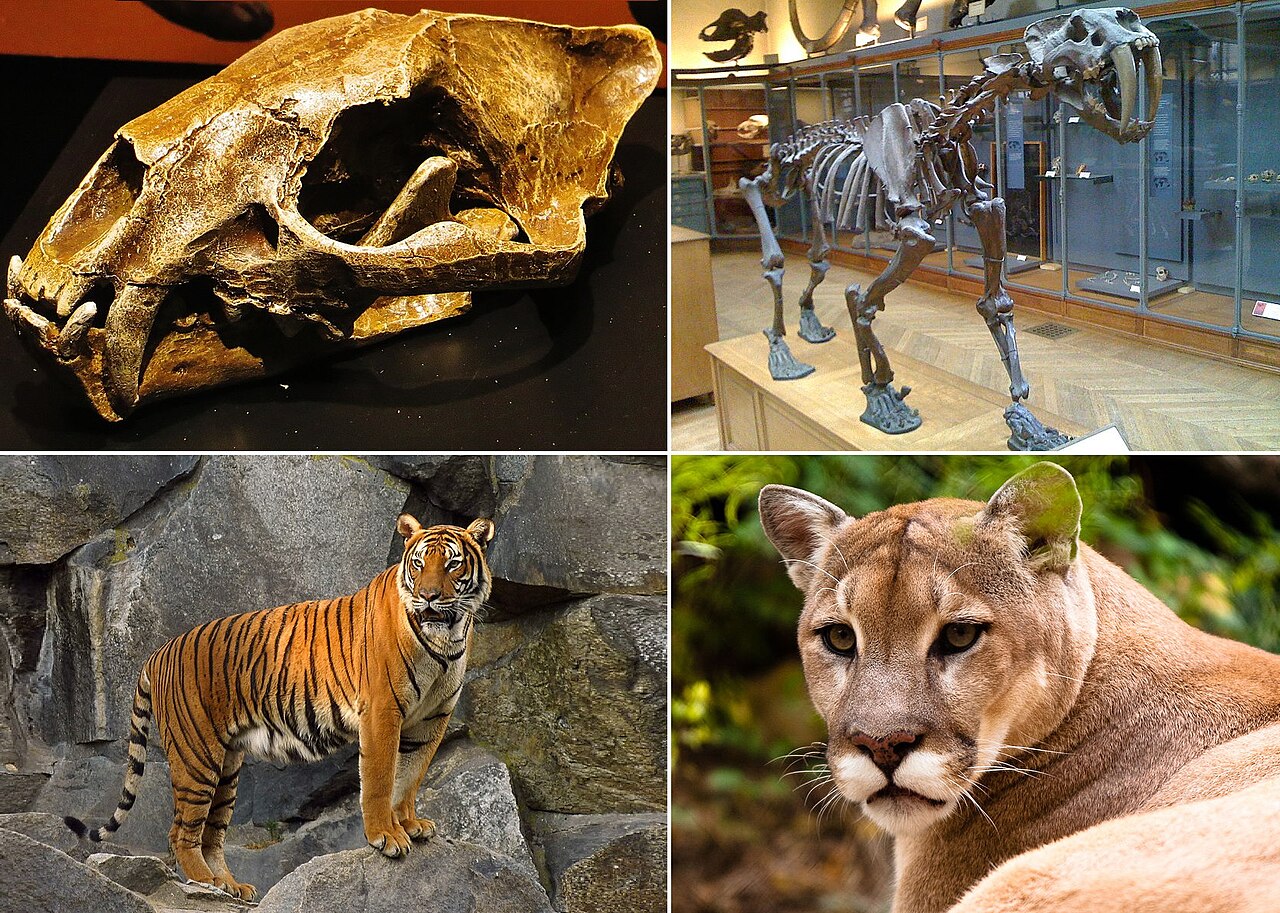
The cat family's story stretches back to the Oligocene, roughly 25 million years ago, when Proailurus and Pseudaelurus first appeared. The Pseudaelurus species complex was ancestral to two major felid lineages: the cats that would populate the two living subfamilies, and the saber-toothed cats of the extinct subfamily Machairodontinae, a group that included the iconic saber-toothed tiger. It is worth noting that the so-called false saber-toothed cats—members of Barbourofelidae and Nimravidae—are not true felids but close relatives. Together with Felidae, Viverridae, Nandiniidae, Eupleridae, hyenas, and mongooses, these groups form the superfamily Feliformia. The Machairodontinae are distinguished by canine teeth of exceptional size, far exceeding those of any living cat, hinting at a very different predatory strategy in the deep past.
Gallery
Frequently Asked Questions
What is Felidae?
Felidae is the biological family that groups together all cats within the order Carnivora. Any individual member of this family can also be referred to as a felid.
How many species are in Felidae?
There are 41 living species in the family, and they show the widest variety of fur patterns among all land-dwelling carnivores.
What is Felidae's feeding strategy?
Every felid is an obligate carnivore, meaning meat is non-negotiable for survival. Most species are solitary hunters that rely on ambushing or stalking prey rather than long chases.
When did Felidae first appear in the fossil record?
The earliest cats showed up during the Oligocene roughly 25 million years ago with Proailurus, and Pseudaelurus followed later in the Miocene around 20 million years ago.
More in Mammals 25-40
Elsewhere in the Mammals universe
Spotted an error? Know more?
This is a living reference — every entry is fact-audited, and reader corrections feed straight into our audit queue. Suggest an edit · See this site's audit record